
I watched Club Brugge go to the San Siro on Tuesday night and score four goals against Inter Milan in the Champions League. Four goals. Away from home. Against one of European football’s biggest clubs.
They won 4-3, picked up three points and delivered the kind of European performance that Celtic supporters can barely even dream about these days.
Naturally, I made the comparison on social media.
The reaction from some Celtic supporters was almost as depressing as our own European performances.
Apparently, comparing Celtic with Club Brugge is irrelevant. We’re not supposed to look at what they’re achieving because, well, we’re Celtic and they’re Club Brugge.
What a load of nonsense.
For years we’ve been conditioned to accept that European football is simply too difficult for Celtic. The financial gap is enormous, the opposition is too strong and we should apparently be grateful just to participate.
Yet here’s a Belgian club demonstrating that competing at that level is entirely possible.
Nobody is suggesting Club Brugge have suddenly become Real Madrid. However, they’ve developed into a club capable of delivering results against serious European opposition.
Meanwhile, Celtic are going backwards.
Club Brugge Are Exposing Celtic’s Declining Ambitions
Let’s consider where we are.
Club Brugge are winning at the San Siro in the Champions League. Celtic are playing in the Europa League, the second tier of European competition, and we’ve already conceded seven goals in our opening two matches.
Seven goals!
Benfica put four past us on Thursday evening, having registered 26 attempts on goal. It’s another statistic that should embarrass everybody responsible for Celtic’s footballing operation.
We’ve become so accustomed to European disappointment that some supporters now seem more interested in dismissing comparisons than asking why those comparisons are becoming increasingly uncomfortable.
Why shouldn’t we compare Celtic with Club Brugge?
We’re both historically significant clubs from leagues outside Europe’s wealthiest five. Both operate in environments where domestic success should provide opportunities to build towards European progress.
Of course, our circumstances aren’t identical. Nobody sensible is suggesting otherwise.
But differences between clubs don’t make comparisons meaningless. They’re precisely what makes those comparisons worth examining.
What are Brugge doing that we’re not? How have they developed a team capable of producing performances like Tuesday’s while Celtic appear further away from that standard than ever?
Those are perfectly reasonable questions.
And dismissing them doesn’t make the problems disappear.
Celtic’s Board Have Overseen This Decline
For me, the responsibility ultimately sits with the people running Celtic.
Managers come and go. Players arrive, disappoint and eventually leave. Recruitment strategies change, yet the overall European trajectory continues to concern me.
We seem to be getting further away from becoming a genuinely competitive European club.
I’ve argued for years that Celtic’s ambitions have been reduced to the point where domestic success is treated as the ultimate achievement.
Winning the Scottish Premiership should always matter. Of course it should. Every title deserves to be celebrated.
But Celtic should be aspiring to considerably more.
I sometimes wonder whether the board are perfectly comfortable with a situation where domestic title races go down to the final day, supporters celebrate wildly and European failure is quietly accepted as inevitable.
That is my interpretation of the culture they’ve allowed to develop, rather than any claim to know their private intentions.
The danger is that supporters become conditioned to regard European ambition as unrealistic.
Well, I’m not accepting that.
Celtic have the support, the history and the financial resources to build something considerably better than what we’re currently watching.
Nobody is demanding we win the Champions League.
We’re demanding a football club that looks capable of competing.
Martin O’Neill Must Take Responsibility For His Selections
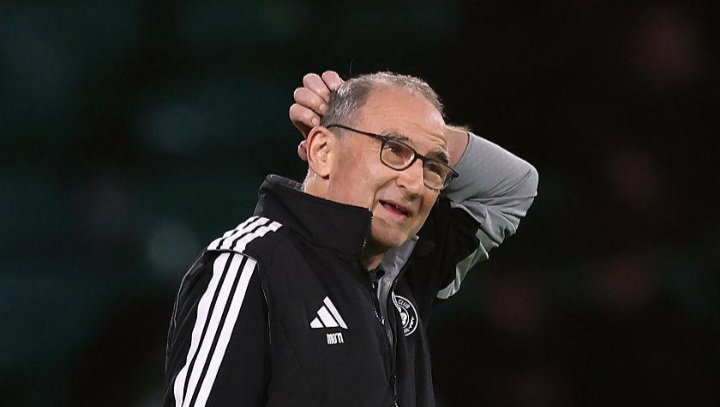
Now, none of this means Martin O’Neill escapes criticism.
Far from it.
I’m becoming increasingly frustrated with the selections, the goals we’re conceding and the failure to recognise what’s happening in front of us.
If a player isn’t performing, don’t keep selecting him simply because he was previously regarded as a first-choice option.
Camilo Durán scored against Benfica. He’s demonstrating that he can provide a genuine goal threat, so why aren’t we making him the focal point of our attack?
Kasper Høgh has struggled for form. That doesn’t make him a bad footballer, but it certainly shouldn’t guarantee him a starting position.
Then there’s Callum Osmand.
The youngster came on against Benfica and made a positive impression. Surely that earns him further consideration?
Haissem Hassan is another one who completely baffles me.
Every time he comes on, Celtic’s players seem instinctively drawn towards giving him the ball. They recognise his ability to make something happen.
His introduction in Lisbon brought greater attacking purpose, and he provided the cross for Durán’s goal.
If the players themselves appear to trust him as an attacking outlet, why are we so reluctant to start him?
It makes absolutely no sense to me.
Murray, Sinisalo And A Defence That Cannot Be Trusted
Dane Murray is another difficult conversation we need to have.
He’s 23 years old. We’re not discussing a 17-year-old making his first tentative steps into professional football.
I simply don’t believe he’s good enough for Celtic at the level we should be aspiring to reach.
That isn’t personal. It’s an assessment of what I’m watching.
His mistake in Lisbon was costly, and I don’t see enough evidence that he’s ready to become a dependable European defender.
Anthony Ralston and Alistair Johnston’s replacement options also raise concerns, while Michael-Ange Lotomba has hardly convinced me that he’s the answer.
But my biggest concern is Viljami Sinisalo.
I’ve watched the goalkeeper make mistakes that, in my opinion, should have been addressed long before now.
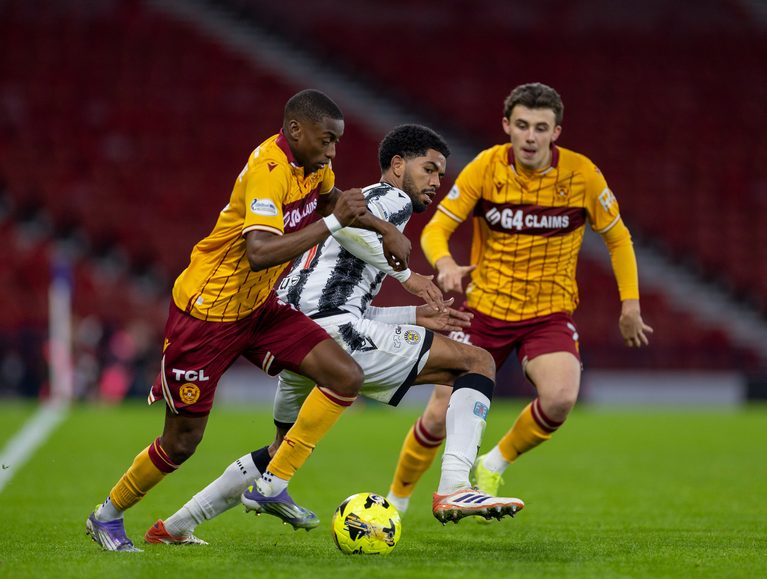
Ahead of last weekend’s Motherwell game, I revisited highlights of our previous visit to Fir Park towards the end of last season.
What struck me was how familiar some of the goalkeeping problems looked.
Shots that should be dealt with more convincingly. Attempts pushed back into dangerous areas. Moments when a goalkeeper needs to take control but instead leaves his defence exposed.
I’ve seen similar problems this season, including against Rangers.
Goalkeepers will always make mistakes, but the repetition of the same types of errors is what concerns me.
I don’t believe Sinisalo is providing the reliability Celtic require.
Martin has to make difficult decisions rather than simply hoping these problems correct themselves.
Hearts Are Coming And Celtic Look Mentally Vulnerable
Tomorrow we face Hearts, and I have genuine concerns.
This Celtic team looks frighteningly vulnerable when something goes wrong.
We concede a goal and too often the entire performance seems to unravel. Confidence disappears, composure goes out the window and opponents suddenly look capable of scoring every time they attack.
It’s not just about defensive ability. It’s about mentality, organisation and leadership.
I honestly cannot remember watching many Celtic sides that appear quite so susceptible to collapsing after conceding.
The team needs cohesion. Players need clearly defined roles, and the manager must select those who are actually delivering performances.
At the moment, it feels as though we’re relying on Rangers dropping points to provide a bit of encouragement ahead of our own fixtures.
How pathetic is that?
Celtic supporters should be looking forward to games because they believe in their own team, not because they’re hoping somebody else does us a favour.
Stop Accepting Less From Celtic
I’ll finish where I started.
Club Brugge winning 4-3 at the San Siro is absolutely relevant to Celtic.
It demonstrates that clubs outside Europe’s richest leagues can still build competitive teams, achieve meaningful results and refuse to accept that their place in the footballing hierarchy is permanently fixed.
The comparison should provoke questions about Celtic’s direction, not anger towards supporters who dare to make it.
We’ve been conditioned for far too long to regard domestic success as the ceiling of our ambitions.
I refuse to accept that.
The board must answer for the direction of this football club. Martin O’Neill must take responsibility for his selections, and the players must start demonstrating the mentality required to represent Celtic.
Tomorrow against Hearts would be a good place to begin.
Because if we’re now at the stage where supporters are defending our European failures by insisting we shouldn’t compare ourselves with Club Brugge, then the downsizing of Celtic’s ambitions has gone considerably further than I ever feared.
I’ve watched this week unfold, from Club Brugge showing what’s possible in Europe to Celtic once again exposing their own shortcomings, and I’m more concerned than ever about where we’re heading — not just because of what we’re seeing on the pitch, but because of how many people now seem willing to accept it.








Comments.
Loading comments…