
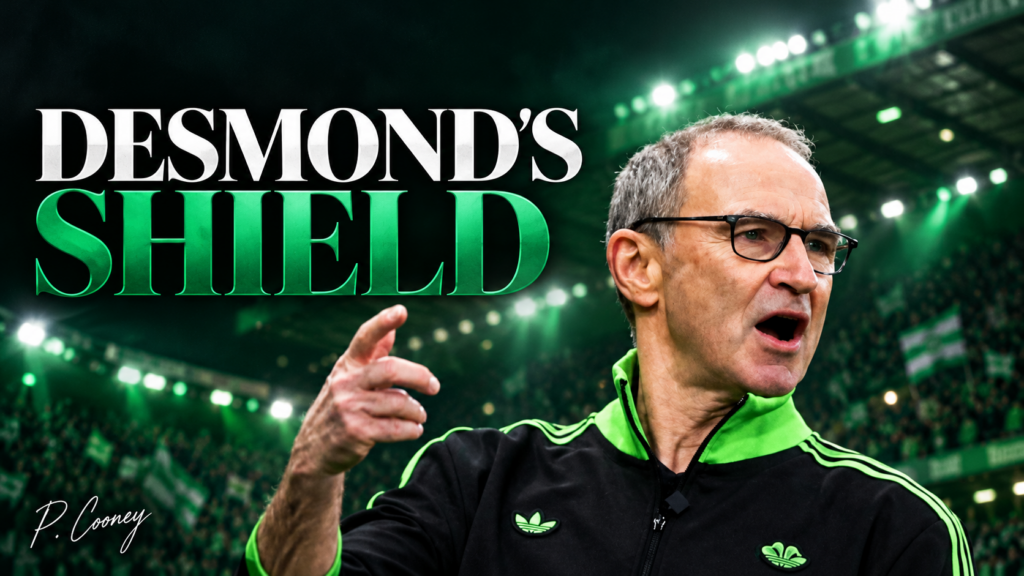
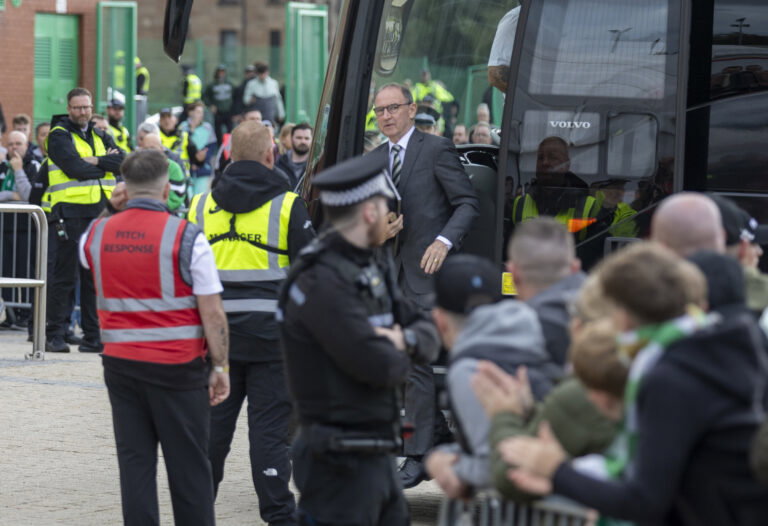
Martin O’Neill has condemned the Celtic fans who protested against Dermot Desmond at St Andrews. But while the manager criticises supporters, the club’s most powerful shareholder remains largely beyond their reach.
O’Neill said: “I don’t agree at all with what happened up at St Andrews.” He also called the protest “not Celtic”. He is entitled to reject the tactics used. I agree that fans should not wear balaclavas to hide their identity. That should apply to Celtic, Rangers and every other support.
But O’Neill’s comments risk making the protest itself the whole story. The deeper question is why supporters feel that a public demonstration is one of their few ways to make Desmond hear them.
Desmond remains out of reach
Desmond has missed Celtic’s annual general meetings for years. Reports have described his absence as a long-running pattern, leaving supporters with few chances to question the largest individual shareholder face to face.
That absence matters. Desmond has enormous influence at Celtic, yet fans rarely hear directly from him. He does not regularly front press conferences or answer supporters’ questions. To many, that looks like a powerful figure living behind a wall of distance and club statements.
The protest at St Andrews was a way to put that frustration in front of him. That does not make every part of it right. The masked supporters should have shown their faces, and I do not defend hiding your identity. But condemning the masks should not end the conversation about why fans feel ignored.
O’Neill’s comparison with Rangers supporters wearing balaclavas also needs care. He was criticising the use of masks, not saying tennis balls were the same as a riot. Still, the comparison can blur the difference between the methods used and the wider protest. Fans can reject masks while continuing to demand accountability from Desmond.
O’Neill must stand on his own record
I suspect O’Neill feels a personal loyalty to Desmond, perhaps because Desmond brought him back to Celtic. That is my opinion, not something O’Neill has said publicly. But O’Neill owes Desmond nothing for the record he built. His achievements came from his own ability, decisions and leadership.
The Brendan Rodgers fallout is a warning. After Rodgers resigned, Desmond issued a public statement accusing him of being divisive, misleading and self-serving. If O’Neill believes personal history guarantees protection, that episode should make him think again.
Supporters have also questioned whether Neil Lennon was willing to criticise Desmond directly. O’Neill should not fall into the same pattern. He can condemn the balaclavas and still say that Desmond must answer for the club’s direction.
Celtic’s recent European setbacks, recruitment concerns and growing split with supporters cannot be solved by telling fans their protest is not Celtic. O’Neill should choose his battles carefully. He can defend the club’s values without becoming a shield for the board.
Desmond should face the questions, and O’Neill should feel free to ask them. His own legacy is strong enough to stand on its own.




Comments.
Loading comments…