
For years now, the Celtic board have told us that they need money in the bank for that dreaded rainy day.
We’ve heard it from Dermot Desmond, we’ve heard it from Peter Lawwell and we’ve heard it from Silent Mike.
But what happens when the rainy day fund drains away without ever having been invested in anything at all?
Because that’s exactly where it looks like we’re headed.
The money was never invested in anything useful
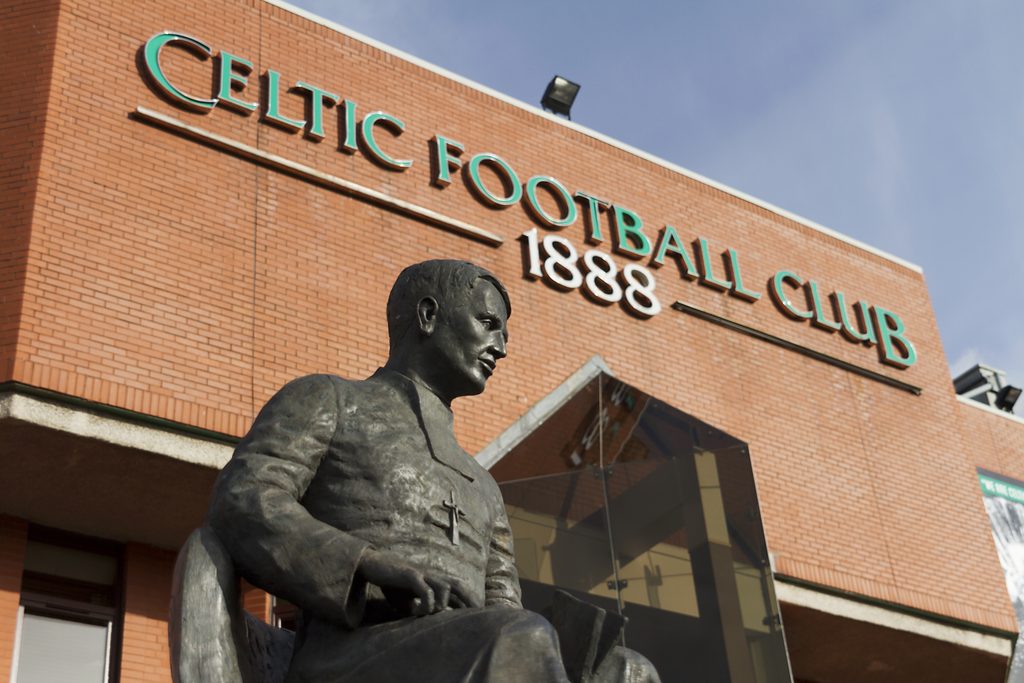
Let’s start with the stadium, because that’s the easiest one to see with your own eyes.
When Fergus McCann handed Celtic Park over in 1999, it was one of the most state of the art stadiums in Britain.
Nothing of note has been done to it since – bar a set of disco lights.
A set of disco lights.
That’s the sum total of the investment in the home of our club over more than two decades.
Now it’s in a state of disrepair, and the board are sitting on a pile of cash.
Make no mistake, that’s not a coincidence.
And then there’s the squad.
None of that money is ever put into the football team, not a penny of it.
The board refuse point blank to buy players outside the player trading model.
You know the one by now.
Sell the big assets, buy cheaper players with the proceeds and then stand up at the AGM waving a player trading surplus.
That’s what the whole thing is built around.
It’s a spreadsheet masquerading as a football club.
Two seasons without the Champions League has already cost us around £40 million
Here’s where the rainy day fund comes back into it.
Over the last two seasons, our failure to qualify for the Champions League has taken roughly £20 million out of the so-called rainy day fund.
Think about that for a minute.
The money that was supposed to protect us from the bad times is being spent on the bad times.
Which is fine, in fairness, as long as somebody is doing something to end them.
But nobody is.
And the way this season is going, it’s the same story all over again.
Another failure to qualify means another lost opportunity to tap into a premium revenue stream.
So by this time next year, the bank balance will have dwindled even further.
I’d love to tell you I think that’s an exaggeration.
I don’t.
They’ve declared war on the support again, and the support is fighting back
As if that wasn’t enough, the board have effectively gone to war with the fanbase once more.
And what did that achieve?
It galvanised the Not Another Penny campaign, which in turn hits the club’s revenue streams even harder.
You couldn’t make it up.
Even Simon Jordan has been having a go at Desmond this week.
The former Crystal Palace chairman was on talkSPORT, and Celtic Shorts picked up what he had to say.
Desmond isn’t the majority shareholder, as Jordan was quick to point out, but he is the largest individual one.
And Jordan doesn’t think he’s put in the fortune people imagine:
“I think, from what I can see, Dermot’s put about £30 million into this football club and taken about £10 million out. So he’s not exactly put a king’s fortune in there.”
Think about that alongside everything above.
Roughly £20 million net from the man with the most influence, and a rainy day fund that is evaporating on his watch.
Jordan’s argument is that influence comes with a price, and that the price is criticism:
“He can sell his shareholding in Celtic and let someone else take the brickbats as well.”
He went on to say that this is a unique club with a unique fanbase, and that Desmond perhaps needs to invest a bit more in interacting with it.
Then came the line that sums it up:
“Otherwise, why be there in the first place?”
Fair question, Simon.
But I’d go one further.
Why have the money in the first place?
So what was the rainy day fund ever there for?
All of this has been driven by the board’s own actions.
Combined, of course, with their inaction on the club, the facilities and the football operation.
Which begs the question.
What was the rainy day fund ever there for in the first place?
It’s dwindling rapidly, and soon it will be of no benefit to the club whatsoever.
If we stay on this trajectory, it will have been invested in absolutely nothing.
Nothing, that is, bar facilitating the downfall of our club.
We had the chance to use it on the infrastructure and on the football squad.
The sad reality is that it now looks like it will be invested in mediocrity.
At most it will have paid the corporation tax bill, and helped finance the managed decline of Celtic.
That’s it.
That’s what all that careful saving was for.
NOTHING.
Useless capital eventually just disappears
Here’s the thing about money that sits there and does nothing.
If it isn’t used or invested, it eventually disappears.
That’s what happens to useless capital.
And I’m afraid we’re watching it happen in real time.
Now, I’ll grant you the board’s defenders will say a cushion is a cushion, and you’d rather have it than not.
Maybe so.
But a cushion that is spent on standing still is no cushion at all.
The opportunity to use it properly under this board has now passed.
Because they are never going to turn this club around.
Not with a crumbling stadium, not with a squad built for the balance sheet and not with a support who’ve had enough.
So when the rain does finally come, and make no mistake it will, what will we have to show for the fund?
Nothing but chaos and decline…
Sack the board!
Key Takeaways
- Celtic’s board has failed to invest the rainy day fund in the stadium or team, leading to a decline in both areas.
- The club has lost around £40 million from the fund due to the failure to qualify for the Champions League.
- The board’s neglect has angered the fanbase, resulting in campaigns like Not Another Penny that further reduce revenue.
- Critics, including Simon Jordan, argue that Dermot Desmond should invest more in the club instead of maintaining a dwindling fund.
- If this trajectory continues, the fund will prove useless, facilitating mediocrity rather than progress.
Choose Read Celtic as a ‘Preferred Source’ on Google News for quick access to the news you value.












Comments.
Loading comments…