
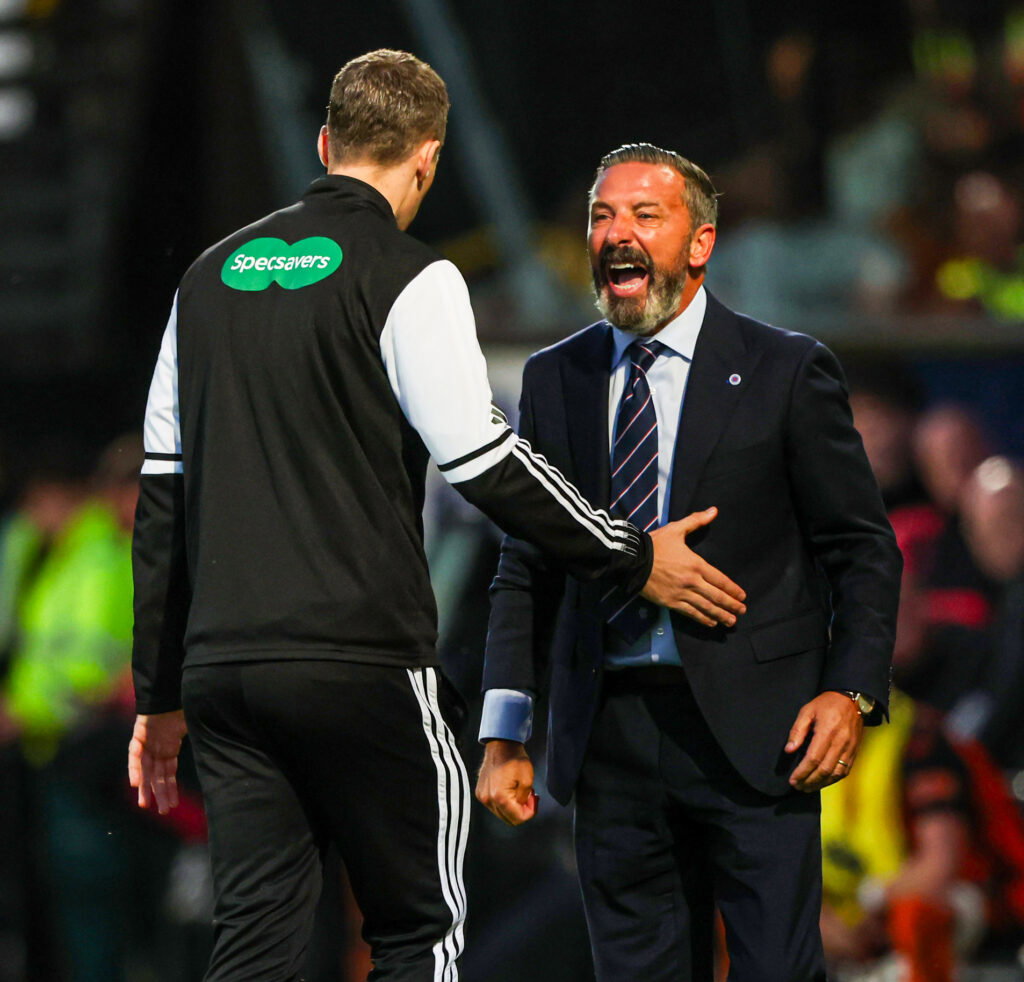
Derek McInnes has done it again.
Following his side’s European defeat in Poland, the manager insisted they had effectively “beat ourselves” rather than simply accepting that the better team won on the night. It is becoming a familiar theme throughout his managerial career. Whenever defeat arrives, there always seems to be another explanation waiting in the wings.
Sometimes, the simplest answer is the correct one.
The Polish side were the better team.
That doesn’t mean McInnes’ players didn’t make mistakes. They clearly did. However, football is about forcing errors as much as avoiding them. Better teams press harder, move the ball quicker and punish lapses in concentration. That’s exactly what appeared to happen.
McInnes himself admitted there were major problems.
“There’s still too many times when we lose the ball in promising situations… that, for me, is lack of organisation, lack of talking, lack of anticipation.”
Those are fair observations.
However, they also lead to an obvious question. If there is a lack of organisation, communication and anticipation, whose responsibility is it to improve those areas? Managers don’t simply analyse problems after the game. They’re expected to solve them before the next one.
Football Lasts 90 Minutes, Not 45
The most remarkable part of McInnes’ post-match interview came when he tried to highlight positives from the second half.
“I know it’s a two-leg thing and we don’t go and throw the kitchen sink at it, because we know we can win the game next week at Ibrox and we had chances.
“We were better second half, and we get a clean sheet second half which we were looking for.”
That sounds positive until you remember one inconvenient fact.
Football matches last 90 minutes.
You don’t earn qualification by drawing one half of a game. You don’t receive bonus points for keeping a clean sheet after already conceding. A 0-0 second half changes absolutely nothing when you’ve already lost the match.
It is a strange statistic to cling to after defeat.
Credit Where It’s Due
Perhaps the biggest omission from McInnes’ comments was meaningful credit for the opposition.
The Polish side looked sharper, more composed and deserved their victory over the full 90 minutes. Recognising that doesn’t diminish your own ambitions. Sometimes the opposition simply perform better.
Managers understandably protect their players, but repeatedly framing defeats around self-inflicted errors can eventually sound repetitive.
The return leg may yet produce a different outcome.
However, if it doesn’t, supporters are unlikely to find much comfort in hearing that their team “won” or drew the second half.
European football doesn’t work like that.
The only score that matters is the one showing when the final whistle blows.










Comments.
Loading comments…