
For years, this was a question nobody around Celtic dared to ask out loud.
Cameron Carter-Vickers was just there.
The first name on the teamsheet.
The defender everything else was built around.

A player whose quality was never up for debate, because for a long time there was simply nothing to debate.
But football has a habit of forcing these conversations on you whether you’re ready for them or not.
And right now, quietly, one is starting.
Because the reports linking us with Sandefjord’s Zinedin Smajlovic – a £3.5m bid already knocked back, the Norwegians wanting closer to £4.3m for the 22-year-old centre-back – aren’t really a story about depth.
Not deep down.
They’re a story about succession.
And whether anyone at Celtic Park has finally started thinking the thing the rest of us have been too sentimental to say out loud.
The Quality Was Never The Problem
Let’s be clear about something before anyone gets the wrong idea.
When Carter-Vickers is fit, he is one of the best defenders in this league. Comfortably.
He reads danger before it happens. He defends the front foot. He’s calm on the ball in a way most centre-halves up here simply aren’t.
I said it myself only weeks ago – when fit, he’s probably still the most important defender at this club.
That word again, though.
Fit.
It keeps following him around like a shadow.
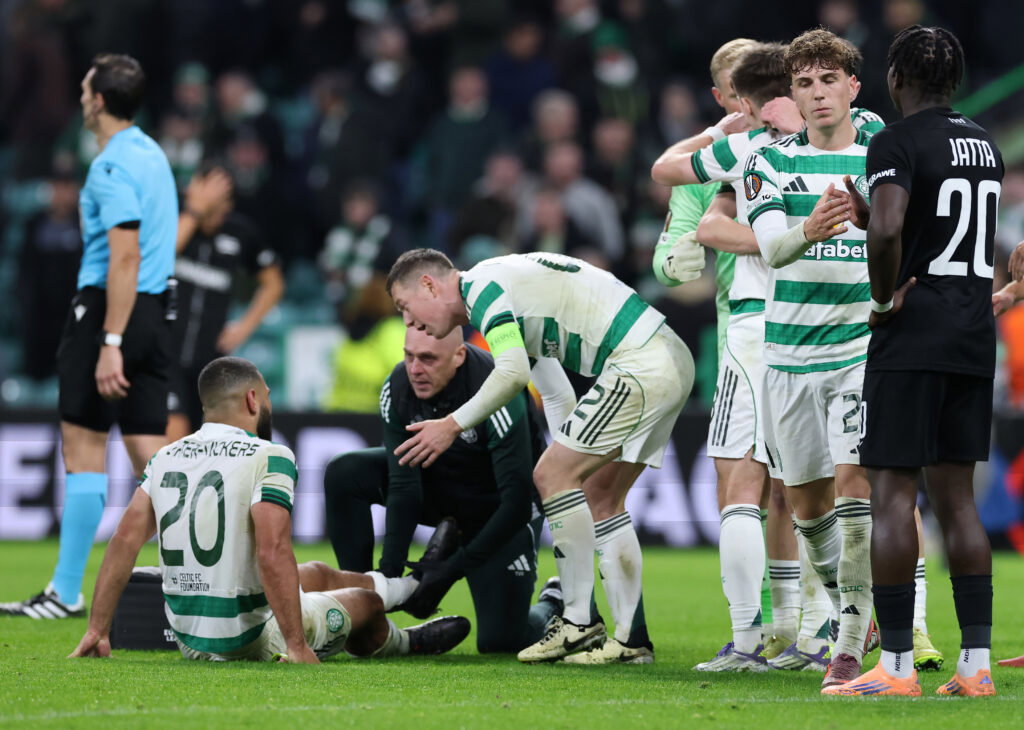
And at some point, you have to stop treating that word as a footnote and start treating it as the actual headline.
The Availability Problem Nobody Wants To Name
Here’s the reality.
A centre-half who is brilliant for twenty games and watching in a suit for fifteen is not the same asset as a centre-half who plays forty.
That’s not a knock on the player. It’s just maths.
For large chunks of last season he wasn’t available. Neither was Johnston. We’ve already covered how badly that thinned us out at the back.
Different injuries. Different timelines. Same outcome.
For me, that’s the bit the club has to be honest about internally – even if they’ll never say it publicly. And honestly, given Nicholson and co.’s track record of saying as little as possible while doing as little as necessary, I wouldn’t hold your breath waiting for the admission.
You can love a player. You can respect everything he’s given. And you can still accept that building your entire defensive structure around his availability is a gamble that keeps coming up short.
Because every season we say, “when everyone’s fit”.
Every season, everyone is never fit.
Every season, we act surprised.
Is Smajlovic Depth – Or A Signal?
So which is it with the links to Smajlovic?
Is the interest in Smajlovic just sensible squad-building? Another young body, future resale value, and depth cover for a long campaign?
Or is it the first quiet admission that the heart of this defence needs refreshing sooner than the official line will ever admit?
For me, it’s the second one.
And I think deep down, most of us already suspect the same.
A 22-year-old centre-back you’re willing to go to £4m-plus for isn’t a fourth-choice signing.
He isn’t cover.
You buy that profile because you’re planning to grow him into something real.
And you only do that when you can see – even faintly, even privately – the day the current cornerstone isn’t the cornerstone anymore.
The board won’t frame it that way, obviously.
It’ll be “adding competition”.
It’ll be “data-driven recruitment”.
It’ll be “exciting young talent with significant upside”.
All the usual phrases that mean everything and nothing – the kind Nicholson and Desmond have turned into an art form when they’d rather not say what they actually mean.
But the move tells its own story.
Replacing Him Would Be Brutal – Let’s Not Pretend Otherwise
Replacing Carter-Vickers properly might be one of the hardest recruitment tasks this club has faced in years.
You’re not just replacing tackles and clearances.
You’re replacing composure.
You’re replacing leadership-by-example.
You’re replacing a player good enough on the ball to start our build-up, experienced enough to organise everything around him.
Look honestly at the current squad.
Is there a centre-half in there ready to be that man tomorrow? Not a useful squad option. Not a solid deputy. The actual leader of the defence – the one the whole shape is built around?
For me, there isn’t. Not yet.
Which leaves two roads.
Spend big and spend now on a ready-made one – and good defenders cost a fortune because everyone wants them and nobody sells them cheap.
Or go young, like Smajlovic, and accept a transition period where the standard might dip while a 22-year-old learns what defending for this club – in front of 60,000, against teams that will target him immediately – actually demands.
Neither road is comfortable. Both cost money. And one of them costs the kind of patience this support has never been famous for.
The Honest Conclusion
So are we overreacting?
Maybe the fitness concerns are overblown. Maybe a proper pre-season and a managed workload under Martin O’Neill gives us thirty-five games of the Carter-Vickers we know, and this whole conversation is irrelevant by Christmas.
Genuinely possible. I’d love nothing more.
But planning isn’t panicking.
And being prepared for the day your best defender is no longer the automatic first name on the sheet isn’t disloyalty.
It’s just doing the job.
Properly.
For me, the smart club does both at once.
It values him for exactly what he is. And it quietly builds the bridge to whatever comes next – so that when the day arrives, we’re ready instead of reacting.
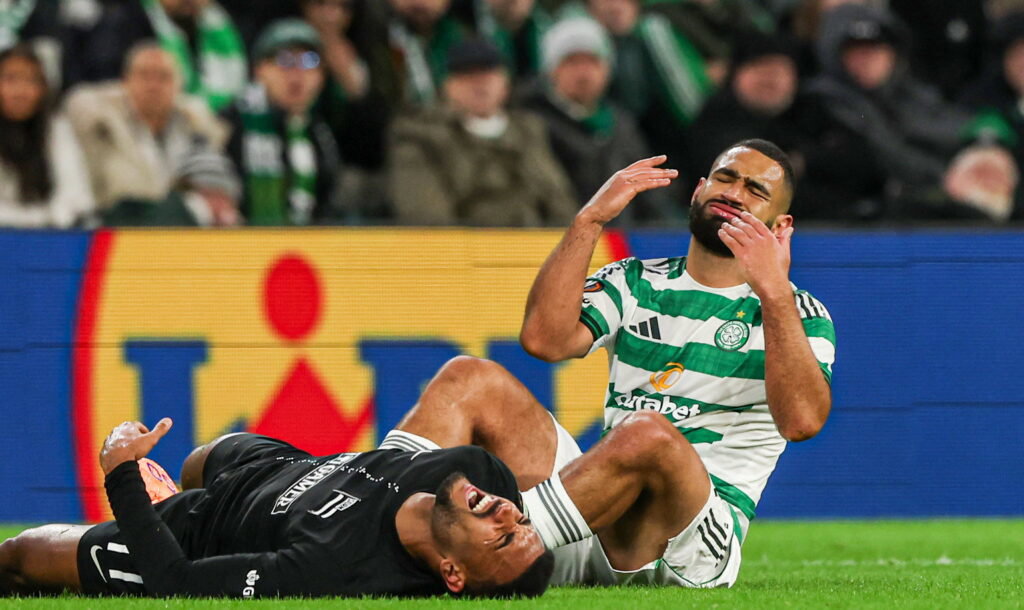
The Smajlovic interest suggests somebody upstairs might finally be thinking that way.
For once, I hope they are.
Because the alternative – waiting until his body makes the decision for us, scrambling in a panic window, settling for whoever’s left – is exactly the kind of short-sightedness that’s cost us before.
Key Takeaways
- Carter-Vickers’ quality when fit is not in question – but his availability has become a genuine, recurring problem that Celtic can no longer treat as a footnote.
- Celtic’s reported pursuit of 22-year-old Zinedin Smajlovic, with a £3.5m bid already rejected and Sandefjord wanting nearer £4.3m, looks less like depth-building and more like the first step in succession planning.
- His legacy at the club is secure, but honouring what he’s given and planning for life after him are two separate conversations – and the best clubs plan early.
- Replacing him properly would be one of the hardest recruitment tasks Celtic have faced, with no obvious ready-made successor currently in the squad.
- The fitness concerns may yet prove overstated, but preparing for a future where Carter-Vickers isn’t the automatic first name on the teamsheet is sensible planning, not panic.












Comments.
Loading comments…