
This summer is already following a script we’ve read before.
We haven’t signed anybody.
But we might be about to lose two of our best players.
Benjamin Nygren and Arne Engels.
Two players are now being measured up for the exit before we’ve brought in a single face to stand alongside them – never mind move us forward.
And somewhere in between, somebody at Parkhead will use the word “ambition” with a completely straight face.
Sell first. Buy later. Reluctantly.
The names change. The pattern doesn’t.
For me, that’s the bit that should worry everyone.
The Annual “Who Are We Cashing In This Time?” Ritual
Here’s the reality.
Celtic are very, very good at selling footballers.
Genuinely elite at it. World-class, even. If there were a Champions League for player trading, we’d be lifting the trophy while the rest of Europe applauded the spreadsheet.
Turning a Swedish midfielder from a 1.5 million player into a 30 million pound into a Tottenham target within a season.
A Belgian midfielder created into a Premier League solution for Elliot Anderson’s 100 million pound move to Man City.
Buy low, develop well, sell high, and then stand at the podium acting like the profit margin was the plan all along.
And it probably was.
For me, that’s the part that’s started to grate.
Because every single summer the message lands like clockwork.
“A strong financial position.”
“The model is sustainable.”
“We’re well-run.”
And all of that is true – I’m not going to sit here and pretend the bank balance isn’t healthy.
But at some point a healthy bank balance has to actually do something.
Otherwise, what exactly are we saving for?
Records We Break, And Records We Won’t
So let’s talk about records.
Celtic will happily break a transfer record this summer. Watch.
If Engels or Nygren goes for the right number, somebody will brief the press about the “biggest sale in the club’s history” like it’s a trophy.
And for the record – I’m not even slightly surprised by this. Not anymore.
A record sale. Framed as a milestone. Framed as proof of how clever we are.
And it is clever. From a balance-sheet point of view, it’s flawless.
But there’s another record sitting right there. The one supporters actually want to see fall.
The incoming one.
The signing that makes you sit up. The fee that tells the rest of the country, and more importantly, the rest of Europe, that Celtic have decided to stop apologising for the size of the institution they are.
“Sustainable” Is Doing An Awful Lot Of Heavy Lifting
We’ve watched what financial recklessness does to clubs in this country – Sevco built an entire identity around it, and look how that ended.
Sustainability matters. Of course it does.
But sustainability and ambition are not opposites. Somebody at Celtic has decided they are.
If a club is operating from genuine financial strength – and we’re constantly told that we are – then why does every single window still get approached like we’re one bad month from administration?
Strength is supposed to buy you the freedom to be brave.
Ours seems to buy us the freedom to do nothing and call it discipline.
That’s not a model. That’s a comfort blanket.
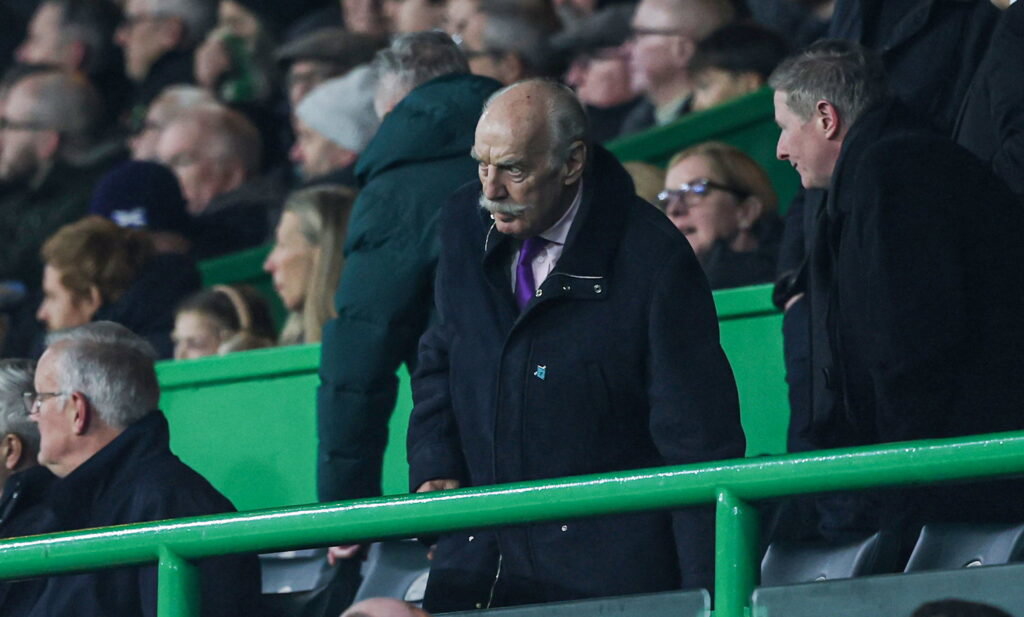
Dermot Desmond and Michael Nicholson have wrapped themselves so tightly they’ve forgotten the football club is supposed to be the point, not the profit and loss account.
Trading Players Or Building A Squad?
There’s a difference between a club that trades players well and a club that builds a squad well. And we stopped being the second one a long time ago.
Building a squad is cumulative.
The team gets stronger every season because each window is laid on top of the last one, not instead of it.
Trading players is circular.
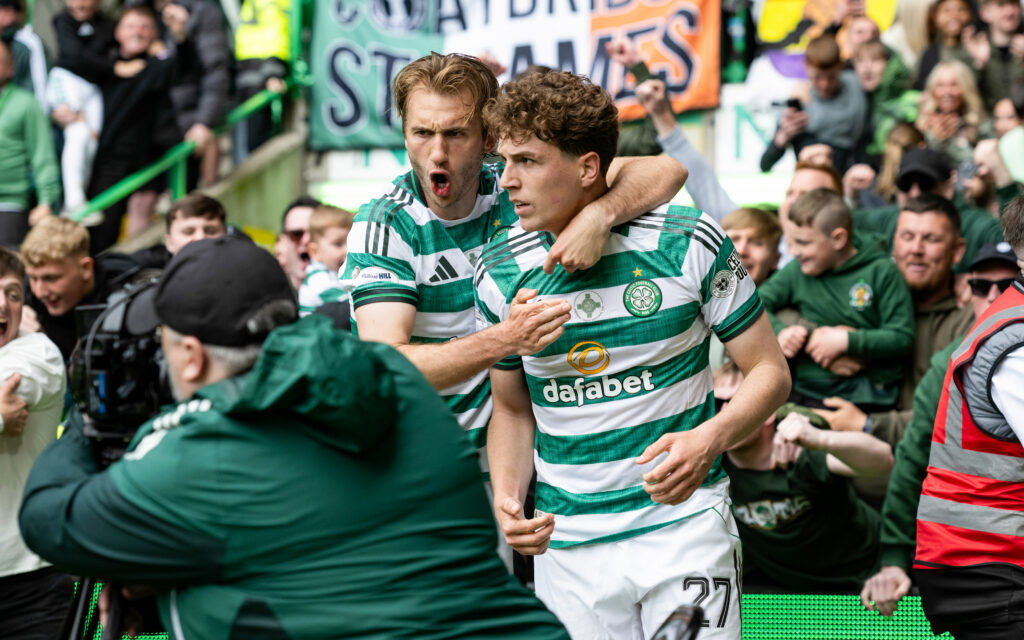
You sign good players. You sell your best ones. You replace them with slightly cheaper versions and start the whole thing again. The squad never actually moves forward – it just changes faces while standing in the same spot.
One of those builds a team that can compete in Europe.
The other is caught in a state of stagnation
Guess which one we’ve chosen.
Different player. Same disease. Same diagnosis. I covered the exact same boardroom logic when the Maeda conversation started.
What Actually Counts As A Good Summer
So ask yourself what a genuinely good window looks like this summer.
Engels and Nygren leaving for a combined fee that sets a new club record.
Or both of them staying – a serious signing or two arriving alongside them – and O’Neill walking into pre-season with a squad that’s actually stronger than the one that finished last season?
Because only one of those is squad building.
The other is just bookkeeping with a crest on it.
Until Desmond and Nicholson understand the difference – really understand it – we’ll keep breaking the wrong records and asking the support to call it progress.
Sell before we buy.
Again.
Key Takeaways
- Speculation around Nygren (Tottenham) and Engels (Nottingham Forest) has revived the familiar fear that Celtic will once again sell their best assets before strengthening the first team.
- The club’s repeated message of being in “a strong financial position” rings hollow when that strength is used to justify caution rather than ambition in the market.
- Celtic are happy to break transfer records through sales while leaving the incoming record – the one supporters actually want challenged – untouched.
- Selling before buying sends a damaging message: to our best players, to rival clubs, and to a support repeatedly asked to manage expectations about Europe.
- The real question is whether Celtic are caught in a cycle of successful player trading rather than successful squad building – and whether the records worth celebrating are the ones on the pitch, not the balance sheet.











Comments.
Loading comments…