

Celtic Football Club, founded in 1887 in Glasgow, is one of Scotland’s most famous and successful football clubs, with millions of fans around the world. Its history is closely linked to the Irish diaspora and social and cultural movements, and its fan culture has become an integral part of the club’s identity. The atmosphere at Celtic Park, the club’s home stadium, is considered one of the most passionate in European football, and even their rivals acknowledge this. The club’s supporters are known for their loyalty, creativity, and activism, and their support extends far beyond the football stands, from charitable initiatives to the creation of legendary fan songs. Like other global communities, Celtic’s fan base encompasses people from all walks of life, from street musicians to users of platforms such as https://bestbonusmoney.uk/crypto-online-casinos/, who combine their love of football with an interest in contemporary digital trends.
The historical roots of fan culture
Celtic FC emerged not only as a sports club, but as an important social project. Its founding in 1887 was the initiative of Brother Walfrid, a member of the Catholic community, with the aim of raising funds to help poor Irish immigrants in Glasgow. Thus, from its earliest days, the club had deep ties to the Irish diaspora and the Catholic community, which shaped the unique character of its fan culture.
In the 19th and 20th centuries, the first Celtic fans created traditions that have survived to this day. They accompanied the team to matches, sang Irish folk songs, and brought green and white flags to the stands. The atmosphere was a combination of football excitement and national and cultural pride. Over time, the first organised fan groups appeared and began to influence the visual and audio image of the stands.
Religious and social factors played an important role in shaping the fan base. For the Irish community in Glasgow, Celtic became a symbol of national and cultural identity, and the rivalry with Rangers in the Old Firm derby reflected not only sporting rivalry but also deeper religious and historical differences between the Catholic and Protestant parts of the city. It is this combination of sporting passion, cultural heritage, and social activism that has made Celtic’s fan culture so powerful and recognizable around the world.
Songs and choral traditions
Music and singing are central to Celtic’s fan culture, creating a unique atmosphere at Celtic Park. For many fans, the match does not begin with the referee’s whistle, but with the first chords and choral performances that unite thousands of voices into a single melody of support.
The most famous fan songs have both football and cultural significance. For example, “The Celtic Song” is the club’s official anthem, which appeared in the 1960s and has since become a musical symbol of the team. Other songs, such as “Fields of Athenry” and “Let the People Sing,” have deep roots in Irish history and culture, telling stories of struggle, freedom, and solidarity.
The origin of the anthem “You’ll Never Walk Alone” is associated with the English club Liverpool, but Celtic was one of the first outside England to adopt this song. It began to be sung in the stands in the 1960s, especially after friendly contacts between fans of both clubs, and quickly became a symbol of unity and support, regardless of the outcome of the game.
The unique chants and melodies at Celtic Park are distinguished by their melodiousness and rhythm. In addition to well-known anthems, fans improvise, creating new versions of songs with humorous or satirical lyrics about their rivals. These are often accompanied by jumping, clapping, or even synchronized waves throughout the stadium.
Musical influences in Celtic songs noticeably combine Irish folk and Scottish motifs. The use of drums, bagpipes, and folk melodies gives a special national flavor, making fan performances not just noise support, but a real musical performance. This tradition not only energizes the players, but also turns attending a match into a unique cultural experience.
Symbols and attributes
Celtic’s symbols are an integral part of fan culture and have deep historical and emotional significance. They unite fans into a single community, regardless of whether they are in the stands at Celtic Park in Glasgow or in a fan club thousands of miles away from Scotland.
- Club colors, crest, and their meanings Celtic’s main colors are traditionally green and white, symbolizing the club’s Irish heritage and the purity of its values. The green and white horizontal stripes on the jerseys are recognizable around the world and have become synonymous with the club’s name. The Celtic crest is adorned with a four-leaf clover, a symbol of luck, unity, and Irish identity. It has changed several times in detail, but has always retained key elements that remind us of the club’s roots.
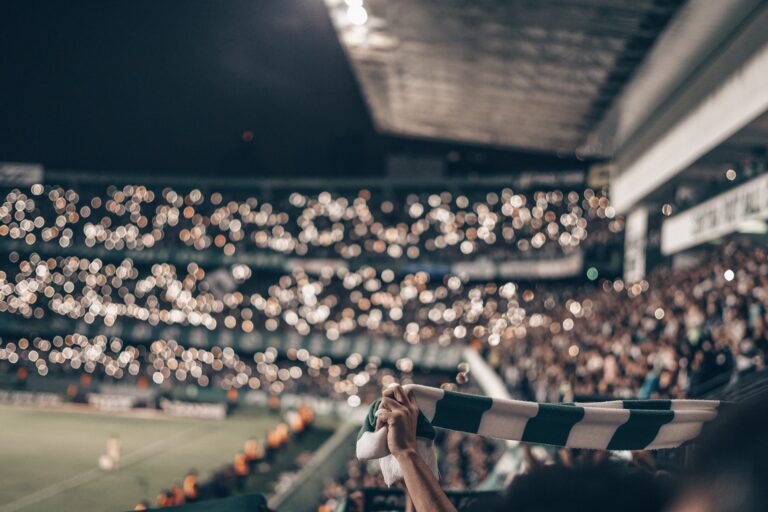
- Flags, banners, scarves, and other fan paraphernalia At Celtic Park matches, you can see a huge number of flags and banners, often in green, white, and gold. They may depict the club’s crest, portraits of legendary players, or historical events. Scarves in the club colors are a must-have for every fan, and the traditional raising of these scarves above the heads during songs has become a hallmark of the fan sections. In addition, badges, caps, and T-shirts with Celtic-themed prints are also popular.
- Use of Celtic and Irish motifs in design Celtic fan and official merchandise often includes Celtic knot designs, Irish shamrocks and crosses, as well as images of bagpipes or harps. These elements emphasize the club’s cultural roots and add a unique national flavor to the symbolism. Even modern designer collections of uniforms and souvenirs combine contemporary aesthetics with traditional patterns, creating a balance between history and innovation.
Fan traditions at matches
Celtic’s fan culture is particularly evident on match days. Every game, especially at home, is accompanied by carefully planned rituals that create a unique atmosphere and energize the team with support.
1. Pre-match gatherings and marches
- Fans often gather in pubs, club bars, or special fan zones near Celtic Park.
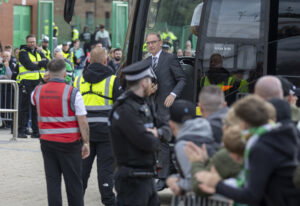
- Organized marches to the stadium take place with songs, flags, and drums.
- Some groups, such as the Green Brigade, prepare themed performances before the game.
2. Choreography, banners, and pyrotechnics
- Large banners (tifo) are unfurled across entire sections of the stadium, depicting historical moments or showing support for players.
- Fans create synchronized color performances with scarves, flags, and cardboard panels.
- The use of pyrotechnics (fireworks, smoke bombs) adds to the spectacle, especially at big games, although this sometimes causes controversy among officials.
3. Atmosphere at home and away games
- At Celtic Park, continuous singing creates a “wall of sound” that is often noted by foreign commentators.
- Away games are accompanied by active support — fans travel to different cities and countries, creating a “home away from home” feeling for the team.
- In Champions League and Europa League matches, the atmosphere in the stadium becomes particularly tense and emotional.
4. Behavior during the derby with Rangers (“Old Firm”)
- The derby with Rangers is one of the most heated in world football, and Celtic fans approach it with particular energy.
- Special songs, banners, and choreography are used, often with historical or political undertones.
- During the match, the atmosphere in the stadium reaches its peak, and every goal is accompanied by an explosion of emotion in the stands.
Fan groups and associations
The Celtic fan community consists of numerous official and unofficial groups that play a key role in creating a unique atmosphere and supporting the club both inside and outside the stadium. Well-known fan organizations:
- Green Brigade — the most famous modern Celtic fan group, founded in 2006. It is located in the north sector of Celtic Park and is known for its large-scale choreography, political banners, and active support during all matches.
- Jungle Bhoys — a group that specializes in organizing banners, chants, and creating a friendly atmosphere in the stands.
- North Curve Celtic — a fan association that includes the Green Brigade and other active groups, coordinating joint projects.
The role of fan organizations in creating atmosphere and supporting the club
- Organizing tifo shows and preparing large banners that have become recognizable in the world of football.
- Supporting the team with loud songs and chants throughout the match, regardless of the score.
- Holding special themed days dedicated to the history of the club or important events.
- Preserving and developing traditions, passing them on to new generations of fans.
Charitable and social initiatives of fans
- Raising funds for local and international charities.
- Organizing campaigns to help low-income families, especially during the Christmas season.
- Supporting social projects related to combating discrimination and promoting inclusivity in sport.
- Participating in events in support of human rights and international solidarity.
The Celtic fan community has long since spread beyond Scotland and even the UK. Today, the club’s fans live on every continent, and their love for the green and white colors unites people of different nationalities and cultures.
International fan clubs
- USA — numerous official and unofficial fan clubs, particularly in New York, Boston, and Chicago, where there is a large Irish diaspora.
- Canada — active fan groups in Toronto, Vancouver, and Montreal, which regularly organize match viewings and charity events.
- Australia and New Zealand — fan clubs in Sydney, Melbourne, and Auckland, where matches are often broadcast at inconvenient times due to the time difference, but fans gather even at dawn.
- Ireland — one of the strongest fan bases, where Celtic is considered “their” club.
- Scandinavia — fan clubs in Sweden, Norway, and Denmark actively participate in European away trips.
Traditional meeting places for fans abroad
- Irish and Scottish pubs decorated with Celtic paraphernalia.
- Football bars that broadcast all the club’s matches.
- City squares or parks where fans gather before away games to organize a march to the stadium.
How the club supports its global fan base
- Official recognition of international fan clubs and publication of their news on the official website.
- Organization of pre-season tours in the US, Australia, and other countries so that fans can see the team live.
- Online broadcasts, club podcasts, and social media with content aimed at an international audience.
- Sale of official merchandise with delivery to any country.
The impact of fan culture on the club’s image
Celtic’s fan culture is not just part of the club’s footballing life — it has become its calling card on the international stage. The loyalty and creativity of the fans have made Celtic one of the most recognizable brands in the world of football. The fans create a unique atmosphere at home games, attracting the attention of tourists and journalists, and their activity on social media, sharing photos and videos from matches, turns every game into a global event. Organized trips abroad shape the club’s positive image as a global community, and fans’ charitable initiatives add to the club’s reputation as a socially responsible organization. A distinctive feature of Celtic’s fan culture is its deep connection to Irish culture and national symbols, which makes the club unique in world football, while the tradition of singing songs with Irish and Scottish musical flavor adds a special atmosphere to the matches. Fans openly support social and political initiatives, which is rare in other clubs, while showing respect for their opponents after the match, which has repeatedly received international recognition.
Celtic Park has been recognized by UEFA as one of the best stadiums for atmosphere, and foreign players who have played against the club recall the “electric” atmosphere in the stands as one of the highlights of their careers. During the 2012 Champions League, when Celtic beat Barcelona, the Spanish press called the atmosphere at the stadium “football theater, where the best fans in the world play,” and even rivals from Rangers acknowledged that Celtic fans’ support makes the Old Firm derby a unique spectacle.
Challenges and controversies
Despite the generally positive image of Celtic’s fan culture, it is not without controversy. The emotionality and active civic stance of the fans sometimes lead to conflicts both within the community and with football organizations. Among the main problems are the use of pyrotechnics at matches, which often results in fines from UEFA and the Scottish Football Association, isolated clashes with fans of other clubs during international away games, and safety violations in the stands, such as entering the pitch after important victories.
A separate issue is the debate surrounding political symbols and slogans. Some fans actively use Irish national symbols and political posters, which sometimes causes tension among football authorities and rivals. Flags, banners, and songs related to the history of Northern Ireland are the subject of heated debate in the media. For some, this is a manifestation of historical memory and cultural identity, while for others it is the politicization of football.
The club and official fan clubs are trying to find a balance between respect for the historical roots of the fan base and the requirements of football organizations. The club urges fans to follow the rules and avoid actions that could lead to fines or reputational damage, while official fan clubs run awareness campaigns aimed at preserving Celtic’s positive image. This approach allows traditions to be upheld while minimizing conflict and negative consequences for the club.
Conclusion
Celtic’s fan culture is distinguished by its depth, historical roots, and unique combination of sporting passion and cultural identity. The dedication, creativity, and active participation of the fans not only create a unique atmosphere at matches but also shape the club’s global image, making it one of the most famous football brands in the world.
The influence of Celtic fans on modern football cannot be overstated: their music, choreography, symbols, and organized away trips set standards for fan support that are recognized both in Europe and beyond. The club’s traditions, deep connection to Irish culture, and the active civic stance of its supporters make Celtic’s fan culture one of the best in the world, capable of combining emotional intensity with social responsibility.
Image Source: unsplash.com











Comments.
Loading comments…