
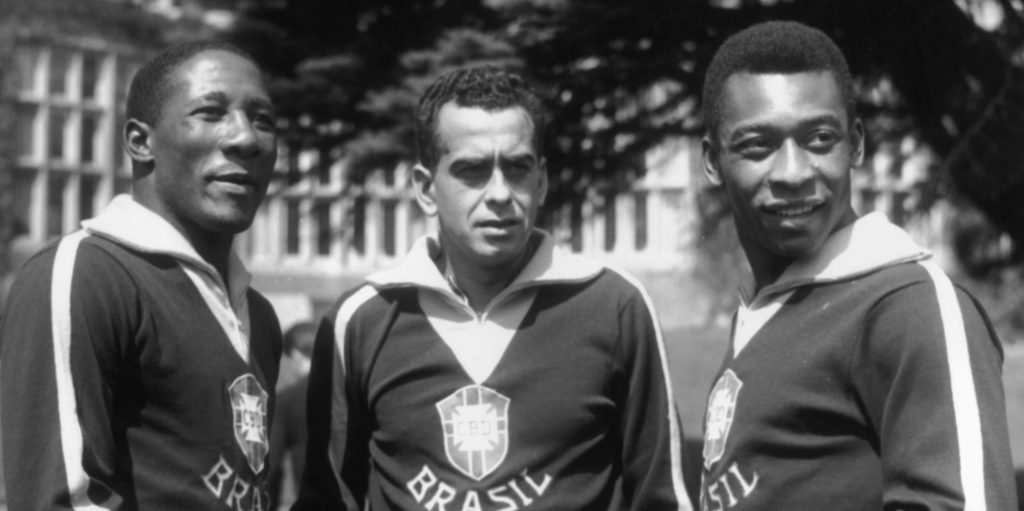
Some nations and countries seem to have a natural affinity for football, giving the world some of their truly legendary players. Think Brazil’s Pelé and Neymar, Argentine’s Maradona and Messi, Portugal’s Cristiano Ronaldo and Figo, and the list could go on and on. While pretty much every country has its professional football league – yes, even North Korea, the most oppressive Asian nation, has a pretty decent team – there are major differences between what players and teams each nation produce. Usually, the clubs from lesser-known leagues bleed talent toward the big ones – there are dozens of former Celtic players, and players from other clubs from the Scottish Premiership, playing at teams in the English Premier League, for example. But there are some nations that seem to have lost the football talent gene, producing far less talent compared to a few decades ago and generally being a shadow of their former legendary selves.
Romania
Back in the mid-1980s, Steaua Bucuresti had perhaps the best lineup Romania had to offer. With legends like Lăcătuș, Pițurcă, Balint, and Bölöni in the field, Duckadam guarding the goal line, and Emerich Jenei giving the instructions from the bench, the team was able to finish the 1986 European Cup final in a goalless draw against Barcelona. The match was ultimately decided with penalties – Duckadam performed a miracle, saving all four penalties, and earning the nickname of “The Hero of Seville”. While football is by far the most popular sport in Romania today, getting hefty government subsidies and topping the list of the 10 biggest betting markets, it is but a mere shadow of its former glorious self. Romanian football has declined significantly since it shed its Communist rule in 1989. The country’s national team only managed to advance to the later stages of a major tournament once since 2000.
Hungary
The “Golden Team” was Hungary’s biggest football sensation to this day. The Mighty Magyars beat England 6-3 in the match that went down in history as “The Match of the Century”, then beat England 7-1 in the rematch, they beat Brazil, Uruguay at the 1954 World Cup, with only West Germany able to stop them in a 3-2 final. While Hungary didn’t have an equally sensational team ever since it had a decent performance in the coming years. That until the 1986 World Cup hosted by Mexico that saw them suffer a shameful loss of 6-0 at the hands of the Soviet Union. Between 1990 and the early 2010s, Hungarian football had pretty much no noteworthy performances aside from qualifying for the 1996 Summer Olympics held in Atlanta. The upcoming generation of Hungarian footballers seems to have put the nation’s football back on the map but the road is hard – in the last few years, the country’s national team has suffered some shameful defeats (including an 8-1 defeat from the Netherlands) and has “consumed” quite a few managers. The investment in the country’s football teams has grown significantly over the last few years, with new stadiums being built and government funding directed toward the sport – we’ll see if this will prove to be enough.
Netherlands
The names Cruyff, van Basten, Gullit, and Neeskens are probably familiar for all fans of international – and Dutch – football. Between 1996 and the mid-2010s, the Netherlands had several “golden teams” with great performances at major international tournaments. Their downfall was fast and painful: in 2014, the nation’s team was unable to qualify for the European Championship, entirely missing the tournament for the first time in 30 years, followed by the team’s failure to qualify for the 2018 FIFA World Cup. Now, the Netherlands national team is under new management – Ronald Koeman took over for Dick Advocaat last year – hoping to regain its former glory in the field.













Comments.
Loading comments…